Living a life of vow

A record of my training as a chaplain and other things Zen.

Sunday, April 8, 2012

What does it all mean by Thomas Nagel

I know I quoted him earlier this year.  Found my notes on the book.  Here are some more juicy bits:

If God is supposed to give our lives a meaning that we can't understand, it's not much of a consolation. 
The idea of God seems to be the idea of something that can explain everything else, without having to be explained itself. 
If God and his purposes are offered as the ultimate explanation of the value and meaning of our lives, that precludes asking 'What's the point of God.'
 If live is meaningless there is no point.  It wouldn't mater if I didn't exist at all, or if I didn't care about anything.  But I do.  That's all there is to it.  Resisting this is a compulsion to take ourselves too seriously.  We want to matter to ourselves from 'the outside'.  (this is the impetus for many ambitions)  
If we can't help taking ourselves so seriously perhaps we just have to put up with being ridiculous.  Life may be not only meaningless but absurd.


Monday, March 26, 2012

I was so desperate for useful information.


Journalist Lisa Krieger's experience of the death of her 88 year old father was recounted in a recent issue of "The Soul of Bioethics", which in tern led me to the Bioethics Forum of The Hastings Center.  
I was struck by the many ways in which she said that the need was for information.  As a librarian and as a chaplain, I think this is a need that can be addressed!
"I was so desperate for useful information." 
[On being asked what advice she would give now...]  "This is what I would have done differently: I would have asked for a road map. A plan. Even if it’s just a back-of-the-envelope flow chart. What are we doing, and why?  I would have asked earlier: “Where are we headed, with all this? What’s the view from 30,000 feet up? Let’s say he survives and makes it out these hospital doors. Then what?” 
I wish someone had told me about the range of choices. Not just: “Do You Have a DNR? Treatment or not?” Rather: “We can do everything. Or we can do some things, but not others. Or we can do nothing, but keep him comfortable.” That conversation never happened. 
I think it is possible to have a conversation about options in aggressive treatment and palliative care at the same time-- early on, maybe upon entering the ER, or even when there is the initial dementia diagnosis. Not when things go south in the ICU. Because then you keep waiting for the perfect time to stop. There is no perfect time. 
Why does this happen?  "It happens because people don’t have enough information, and support, to trust their decision."

The Dax Cowart Case


CPE Reflection - The Dax Cowart Case, 3/26/2012

The Dax Cowart case, as narrated in series of videos done in the early 1980s, is a moving exploration of how societal perspectives on the right to die and patient autonomy have evolved.  Considered along with a second video series done in the 1990s and Mr. Cowart’s own writings,  the case offers a reflection on the challenges a society has in assessing its own ethics (standards that encompass the norms of the community) while holding to individual ideas of moral behavior (e.g., ideas of right and wrong). (All sources are available on YouTube retrieved with the search "Dax Cowart.")

In 1973, Dax Cowart suffered third-degree burns over two-thirds of his body.  Concurrent with the devastating pain and impact of those burns, he was immediately rendered blind and without the use of his hands.  From the moment of the accident and through the initial and subsequent treatment, Dax Cowart maintained and strongly expressed a wish to die:  He asked the farmer who found him at the accident site to give him a gun so he could end his suffering.  He asked to be allowed to die while in the ambulance.  He asked to be allowed to die before and during treatment.  He produced a video in 1974, while he was in one of the two hospitals where he was treated, titled “Please Let Me Die.”  He attempted suicide when he was subsequently released.

His mother also received Mr. Cowart’s repeated requests to die.  Her role is especially poignant since she has lost her husband in the same accident.  She reports that she relied on the advice of the many physicians in assessing what was “right” for her son.  Since Mr. Cowart could not sign consents for treatment, and since his requests for death were initially deemed to be irrational and hysterical, his mother bore primary responsibility for her son’s initial treatment authorizations.
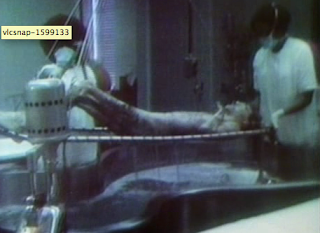
The treatment he received for his burns, reflecting the state of the art of the time and the profound physical crisis of third-degree burns, was extraordinarily painful.  Mr. Cowart describes it as being “boiled in oil” and “skinned alive” for several hours each day for a period of months.  This torment was experienced by a man was never shown to be anything other than fully alert and mentally competent.  
Both in initial interviews and those offered years later, it is clear that his experience of suffering was one altered and defined his world view - in ways that he would have preferred to avoid.

To the extent possible, Mr Cowart attempted to deny treatment, and subsequently accepted treatment only in the hope that he could ultimately leave the hospital and take his own life.  I heard in his account of his return to his mother’s home both the frustration of a young man having to return to a childlike state and the amazing endurance of that same “young” man in trying to understand what was possible to him in his current circumstances.  Nonetheless, his conclusion was to attempt suicide twice, despite the extraordinarily limited ways in which a sightless man without hands has to accomplish this.  
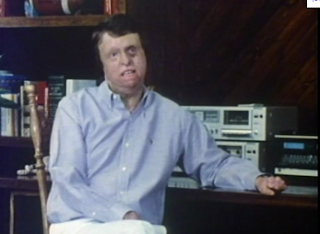
What is most striking to me is the role of his anger at injustice  The energy of Mr. Cowart’s anger comes through in his speech, but also in this subsequent life’s work as a businessman, lawyer and advocate for patient’s rights.  As an advocate he has repeated his fundamental argument:  the decision to accept or deny treatment, to continue in this life or not, was his.  While he has attained a measure of happiness in the circumstances that he has found himself in, nonetheless, this was not the life he would have chosen at the time of the accident.  He claims the right to have said no and remains passionate in his defense of that right.  
“The right to control your own body is a right you’re born with, not something that you have to ask anyone else for, not the government, not your treating physician, not your next-of-kin. No one has the right to amputate your arms or your legs without your consent. No one has the right to remove your internal organs without your consent. No one has the right to force other kinds of medical treatment upon you without your consent. There is no legitimate law, there is no legitimate authority, there is no legitimate power anywhere on the face of this earth that can take the right away from a mentally competent human being and give it to a state, to a federal government, or to any other person.” 
As evident in a published 1994 dialog between Dax and one of his physicians, the perspective of years and several life accomplishment have not diminished the animating anger at the injustice he feels he experienced.  If anything, those years have sharpened his reasoning in defense of his initial position.


One of his treating physicians, Dr. Robert Burt, argues that, particularly at the time of the injury, Mr. Cowart’s expectations of the outcomes of treatment and of his future life were necessarily colored by his youth, his inexperience with injuries of this type, and his cultural biases as an “able-bodied” person assessing the life experience of a “dis-abled” person.  The role of the physician is to take the wishes of the patient seriously, but also to challenge them with new information; in fact, to “argue strenuously” if the doctor believes those wishes to be grounded in false assumptions.  Dr. Burt notes that such a conversation is not one that can be had in a matter of moments.  It takes time for concepts to be explained, for argument and understanding to take place, and decisions to be reached.  The Dr. stands by his original position to deny Mr. Cowart’s request to not be treated and to be allowed to die.

Given that he achieved much of what is accepted as “success” despite his disabilities - professional accomplishment, marriage, and financial independence, it would be easy to look at the full trajectory of Mr. Cowart’s story and serve up rationalizing platitudes:  see, he found happiness in the end; his suffering had a purpose; think of all the good he has done; his mother was right; or the one I find most challenging - God only gives us what we can handle.

Further, I am struck by how the conversation would be different if Mr. Cowart had been 17 instead of 26 - the decisions of his mother and guardian would have been unquestioned and his wishes would have had even less weight.  This would have been the same outcome if Mr. Cowart had been deemed mentally incompetent or mentally disabled.  Alternatively, if disfigurement and treatment were the sole issue versus blindness and disability resulting in the loss of independence; in that instance would the arguments of Dr. Burt about treatment outcomes and future prospects have been better received by the young adult Mr. Cowart?  And how different would the conversation be if the current understanding and tools for pain management were in play?  

Mr. Cowart is explicit in stating that his primary reason for wishing to die was not about future independence; in fact, he acknowledges that the concerns he had then have been proven to be overblown.  His wish to die was motivated by his difficulty in handling the profound “excruciating” pain of his injury and treatment.  He believes it was his right at that time - and now - to say he had had enough.  Further, he contends his decision was both “informed” and “voluntary” and nonetheless he was denied its execution because to others it was deemed a “bad” decision.  Mr. Cowart argues that this is an abrogation of a fundamental right:
Justice Louis Brandeis wrote in one of his Supreme Court opinions: “The makers of our Constitution sought to protect Americans, and their beliefs, their thoughts, their emotions, and their sensations. They conferred as against the government the right to be left alone, the most comprehensive of rights and the right most valued by civilized man.”    Warren Burger, who later became chief justice, referred to Justice Brandeis: “Nothing suggests that Justice Brandeis thought an individual possessed these rights only as to sensible beliefs, valid thoughts, reasonable emotions or well-founded sensations. I suggest that he intended to include a great many foolish, unreasonable and even absurd ideas that do not conform, such as refusing medical treatment even at great risk.”    Justice Burger did not want to encourage foolish, unreasonable, or absurd conduct, but he did recognize the importance that the individual has in making his or her own decision. He understood that what some of us might think of as foolish, unreasonable, or absurd can also be something that is very precious and dear to someone else.
I view human life and sentience as a unique opportunity.  Aware that our span is brief and that we will all die, we nonetheless project ourselves forward - reproduce, create, dream - and like the animals we evolved from - feed, flee, fight, and fornicate.  Meaning in this brief span is what we give it.  Some choose awareness and compassion.  Other the advancement of knowledge and altruism.  Others the acquisition and expenditure of wealth.  Others may chose endurance or violence.  No matter the choice of meaning, it is the energy of personal agency that animates individual actions.  It is personal autonomy in making a daily roster of choices that ultimately define who we are and constitute the summative measure of our time.

Ethically, I agree with the principle of patient autonomy.  Mr. Cowart’s statement is one I would echo for myself.  I do not think there is a moral absolute that can guide this decision; it is a personal one.  For me, it would be grounded in my perspective of this human life as a singular opportunity to learn and do and experience.  To the extent that I those actions would be compromised, I would have to assess whether I could fulfill my expectations of this life.

I am moved by  Mr. Cowarts embodiment of something I have often thought was true - it is often harder to live than to die.  Hard in that we know best how to suffer in this life - how to deny, cling, strike out and strike within; but seem less knowledgeable and confident in our ability to endure, and to them receive - let alone to give - empathy and compassion.  

Despite his circumstances, Mr. Cowart - who was forced to endure - surmounted his injures and had a life that would be deemed rich by any standard.  The man of 26 may or may not have been the man in his 60s who wrote the flagrantly emotional, loving poem that he recited at a July 2011 trial lawyers conference.  My Cowart had a life, despite himself, and grew.  He may have wanted to grow differently, but this is the one life he got.

Sunday, March 11, 2012

Citizen Conn by Michael Chabon (New Yorker Feb 13 & 20, 2012)

Everything is chaplaincy?

I usually skim or skip the fiction in The New Yorker.  But then I unexpectedly found myself pulled into this piece.  The narrator is a female Rabbi in an assisted living facility (hard to call them homes);  key characters are two men who had been partners in creating sci-fi comics in the 60s and 70s.  The 2nd page yielded this observation by the narrator when offered a cup of tea:


Naturally, I wanted to reply that he ought not to bother, that he should just sit down and rest and let me put the kettle on for him.  But over the years I had seen enough of the assiduous cruelty of children and grandchildren, in suppressing old people's vivid hunger for bother, to know better.
That phrase - assiduous cruelty - arrested me, reflecting a studied non-seeing that belies the notion of "help" that can underlie encounters in pastoral visits.  The truth of that observation changed the story for me - from a piece of fiction to an opportunity to observe how this (fictional) Rabbi interacted with her clients is connecting and offering care.

The partners had suffered a falling out.  One is desperate to make amends, the other denies him that closure.  The fault line in their relationship had likely been there since the beginning, which allows the story to also offer a reflection on what we understand of friendship.  The fault (line) is described at the very end of the story as "our everlasting human cluelessness".  It is so vivid in the story - the inability of one friend to really see the basis for friendship with the other, despite years of knowing each other.  Wow - what a testament to the value of cultivating present moment awareness.

Thursday, March 8, 2012

23rd Psalm

Always a beautiful verse, this is actually quite new for me when you swap he for she.  McFerrin recorded this in tribute to his mother.

23rd Psalm by Bobby McFerrin

The Lord is my Shepard, I have all I need,
She makes me lie down in green meadows,
Beside the still waters, She will lead.

She restores my soul, She rights my wrongs, 
She leads me in a path of good things,
And fills my heart with songs.

Even though I walk, through a dark and dreary land,
There is nothing that can shake me,
She has said She won't forsake me,
I'm in her hand.

She sets a table before me, in the presence of my foes,
She anoints my head with oil, 
And my cup overflows.

Surely, surely goodness and kindness will follow me,
All the days of my life,
And I will live in her house,
Forever, forever and ever.

Glory be to our Mother, and Daughter,
And to the Holy of Holies,
As it was in the beginning, is now and ever shall be,
World, without end. Amen


Monday, February 13, 2012

CPE Reflection #3

CPE Reflection #3, due 2/13/2012

"...if then I bend over and pick up a stick, he (Monty) is instantly before me. The great thing has now happened. He has a mission. It never occurs to him to evaluate the mission. His dedication is solely to its fulfillment. He runs or swims any distance, over or through any obstacle, to get that stick.
And, having got it, he brings it back: for his mission is not simply to get it but to return it. Yet, as he approaches me, he moves more slowly. He wants to give it to me and give closure to his task, yet he hates to have done with his mission, to again be in the position of waiting.

For him as for me, it is necessary to be in the service of something beyond the self. Until I am ready he must wait. He is lucky to have me to throw his stick. I am waiting for God to throw mine. Have been waiting a long time. Who knows when, if ever, he will again turn his attention to me, and allow me, as I allow Monty, my mood of mission?..."

                              Alan Wheelis, The Listener (a memoir)

Wheelis makes an analogy between a dog’s expectant waiting for purpose (fetch the stick) and our own expectancy (and need for) a purpose that is articulated externally (from God).  The poignant closing words of hope and expectancy evoke one particular encounter with a patient a year ago"  "Why was I spared - again and again?  To do what?  Did I miss [the message]?"

I am struck by how distinct this external seeking is from my understanding of Buddhist thought, as well as how explicitly contrary it is to several recent readings that made sense to me - Sam Harris’ The End of Faith (holding us fully accountable for our beliefs, and urging that we look within to understand their source and value), and Karen Armstrong’s Twelve Steps to a Compassionate Life (proffering that compassion should be sufficient to animate purpose and a better world for all).  

From my Zen practice,  I experience meditation (turning the light inward) as a means to experience (brief) insights into the true nature of reality (impermanent, empty, undifferentiated), which leads to .....and here is a leap that I can’t yet explain fully or well ....compassion and a commitment to compassionate action.   Simplistically (because really, that’s where I am right now), this reflects a truth of no-difference, i.e., that we are all confronting the same challenges and that we sink and swim together.  In this vein, I understand my “purpose” to be compassionate action that flows from the realities of the moment.   That purpose is further animated by continued (Zen) practice -dedication to inquiry about the truth of the present moment and a wish to be attentive and available to what emerges.  It is renewed with each breath.  (Hmmm...which must mean that when I act like a dolt...I stop breathing.  Gonna keep an eye on that.)

Would that I had the skillful means to guide a patient in an existential crisis to a reaffirmation of their own universal nature and the ability to draw strength (and purpose) from its expression in the moment.  A patient recently expressed being trapped (by her life circumstances and illnesses).  I have been thinking about how that perspective occurs and what it takes to get un-trapped.

(Any resemblance to the Deathly Hallows is just plain...funny.)

Our cultural and social norms define the options for purpose and action.  Within those norms, the accidents of birth (nature and nurture) define a view of what is possible for each of us.  (I am willing to argue for the role of karma here, but not now.)  Within that view we define an individual sense of role and capabilities.  If we are fortunate, we can see a reasonably full spectrum of possibilities (and purposes), but in all likelihood, we will have blindspots as peer at the world from the Johari House of our life’s design.  

We exist nested within these structures.  What is it to have a view of the nest itself? Like the fabulous ending to Men in Black, how do we draw back far enough for that view?  

I think such a perspective is necessary to understand purpose.  Alternatively, purpose-seeking will lead with the blindspot-ladden self.  Looking externally for purpose, looking from within our nested worldview (and biases), how can we expect to see what is needed?  It appears all to easy to default to a judgement-rich “acceptable” view of purpose, expediently defined by socio-economic circumstances, peer groups, and chance.  


Does such a default position serve? Can useful purposes be articulated from that vantage point?  My biases point to no.  I fear the world we have is the result of these blindspot-ladden, self-directed determinations of purpose:  a world in which caring for each other, our communities, and our earth is somehow not quite grand or sufficient a purpose; instead we leave that work to an unknown, undefined, and poorly valued other.  (My experience in service professions is certainly showing itself here!)

Perhaps the sense of purpose I am proposing is too relativistic.  But then, not holding to a belief in an external God from whom an absolute worldview is drawn, it seems appropriate.  My focus is on the moment to moment understanding of what is present, what there is to work with, what emerges in response to the suffering (physical, existential) that may be present, and in response to the amazing wonder of life that is before us. For me, this inquiry is sufficient to animate a sense of purpose.

As I write that last line, I am reminded of the parable of the blind sea turtle.  Adrift, it only surfaces every 100 years. Now imagine there is a small ring in this vast sea. It is more likely for the turtle to accidentally poke its head through that ring than to be born a human being.
This gift of our lives deserves the inquiry of purpose. The existential inquiry (and pain) that drives us to inquire about purpose - whether through religion, philosophy, communing with nature, etc. - is an attempt to honor that gift.  


Saturday, February 11, 2012

Circles, wheels, spirographs


The Motivation Futility Cycle is from a perversely funny source called Despair.com, which offers a brilliant response to all the annoying motivational messages that assault in a corporate setting.  (Read through the roster of "demotivators" and tell me which aren't true statements?!!!!)

Initially I saw this as a witty take on how businesses trying to strategize their way out of a bad business situation:  Hmmm, let's reorganize (shift the deck chairs on the Titanic).  Yeah, that'll do it.  Awe, results not so good.  Must have done it wrong. Pinterest, that's it.  Hmmm, no success.  I got it, let's Tweet more!

This takes a more menacing tone when seen as a reflection of patient thinking as they confront illness and diagnosis:  Seek out a new motivational stimulation (hope in a treatment), roll with it enthusiastically (it'll all get better now), learn that it has limits, and crash down into despair, which necessitates seeking out a new motivational stimulation.

Hope is good, new treatments are good.  What is demotivating and exhausting (to me) is not seeing the cycle in perspective (as the flow of samsara and part of the journey on the wheel of life).  More troubling still is not having any idea of what it could mean to step out of it!   Lacking that perspective, all contracts to the energy of three poisons (greed, anger, delusion)as it spins that wheel.

Wheel of Life
A recent patient encounter made me think of this most keenly.  Chaplaincy in that instance seemed most like an opportunity to walk with someone fo a moment in that cycle (since we're both on the wheel of life, it's could be like the intersecting segments in a spirograph) and maybe step with them - if just for a second - onto a by-road for a breath.

Hmm...did I finally discard that spirograph?